Features Specifications Appliaction Download
Products Industrial Communications Serial Device Servers 4-ports Serial Server
SDS443H; 4-Port RS232/485/422 to TCP/IP Serial Server
SDS443H
SDS443H; 4-Port RS232/485/422 to TCP/IP Serial Server

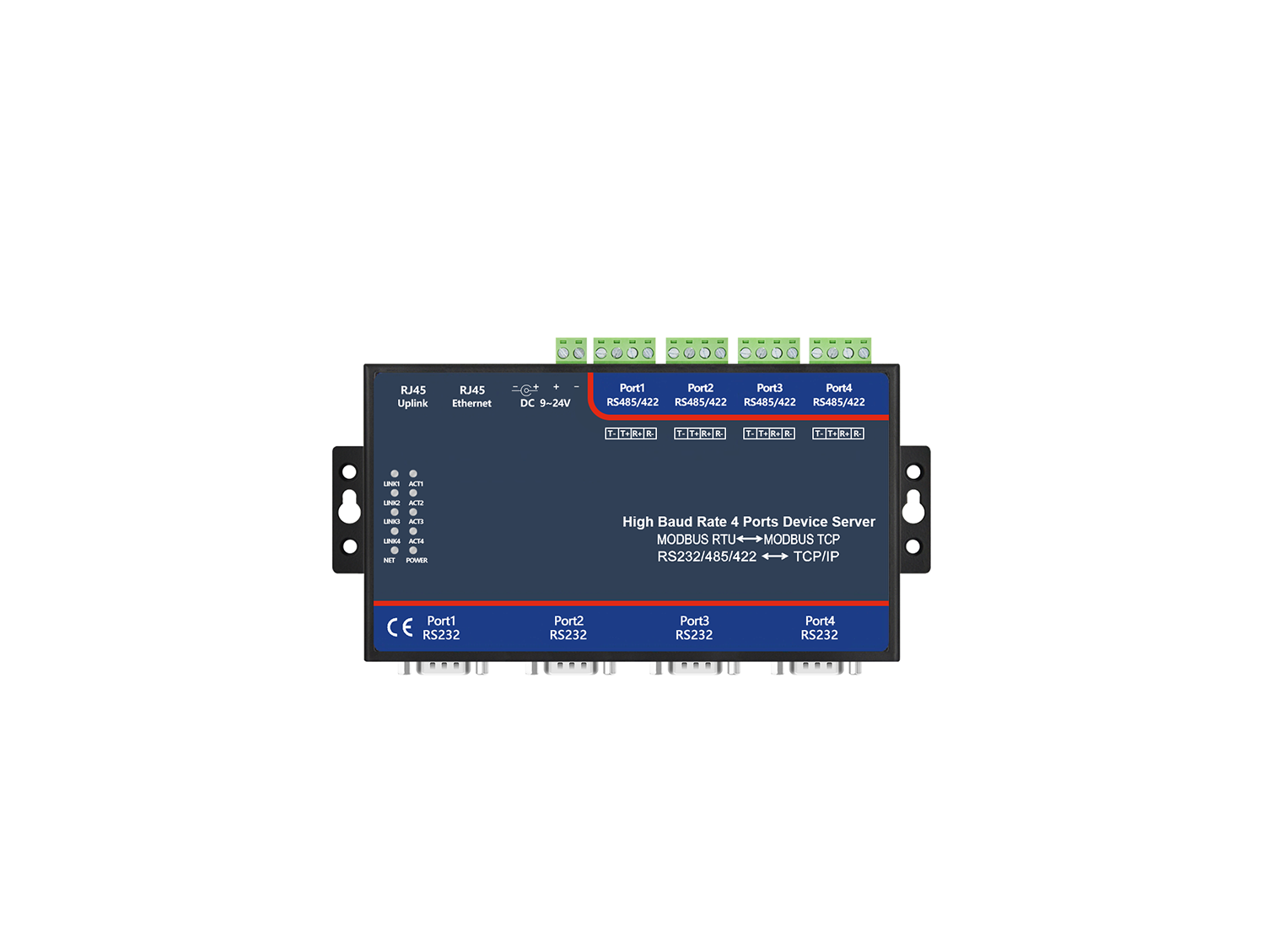
The SDS443H is a 4-port serial server designed to convert data from 4 serial ports into TCP/IP format. It features two 10M/100M Ethernet ports and includes Modbus gateway functionality, enabling the conversion between Modbus TCP and Modbus RTU. This Modbus gateway supports simultaneous data access by multiple Modbus clients—a feature known as "multi-master" support.

  • The device can connect to up to 6 destination IP addresses as a client.

  • It is equipped with 4 RS232 serial ports and 4 RS422/485 serial ports. By connecting the SDS443H to a network via a single Ethernet cable, a host computer can access all 4 serial ports simultaneously using either virtual serial ports or the TCP protocol.

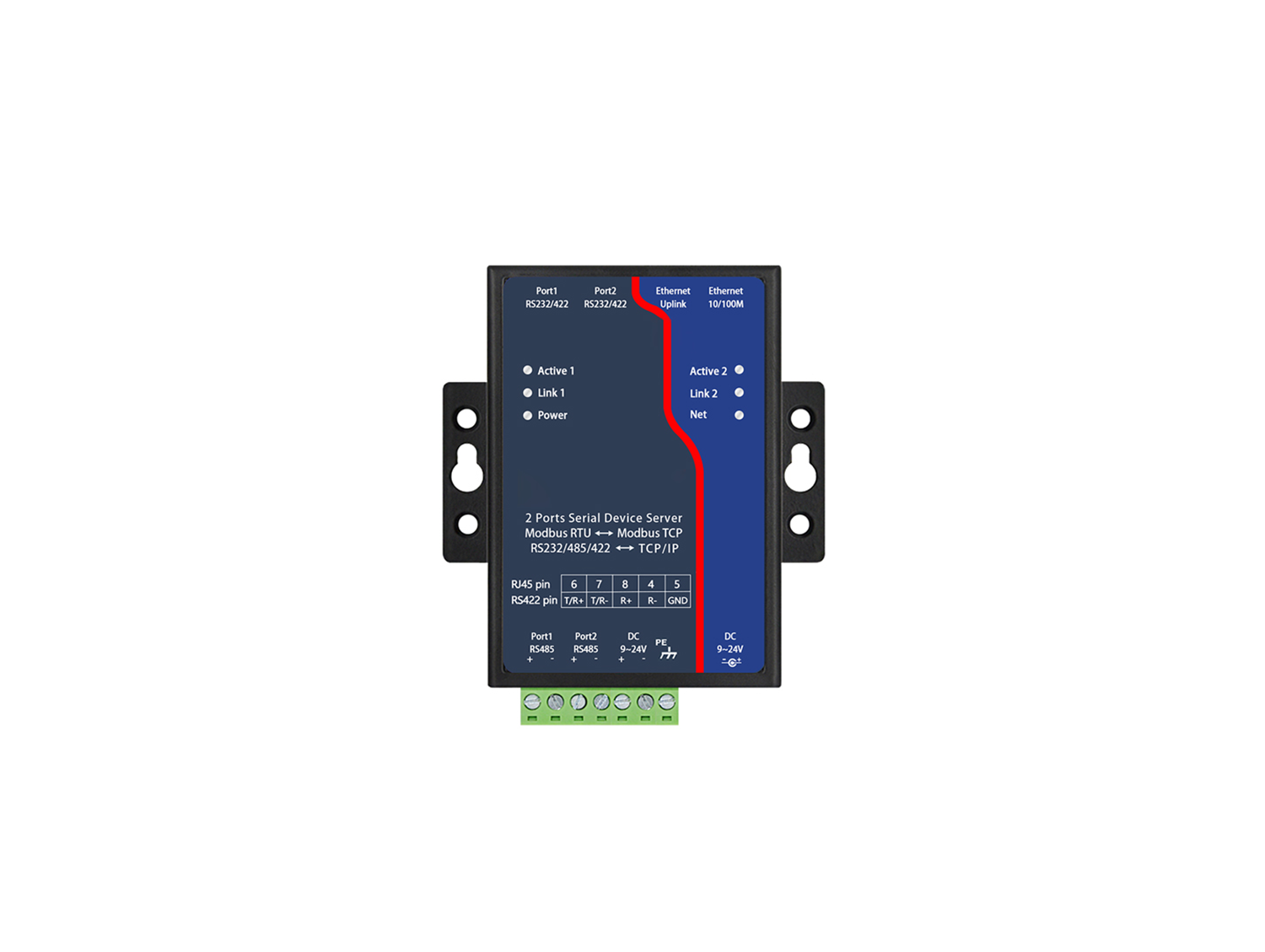
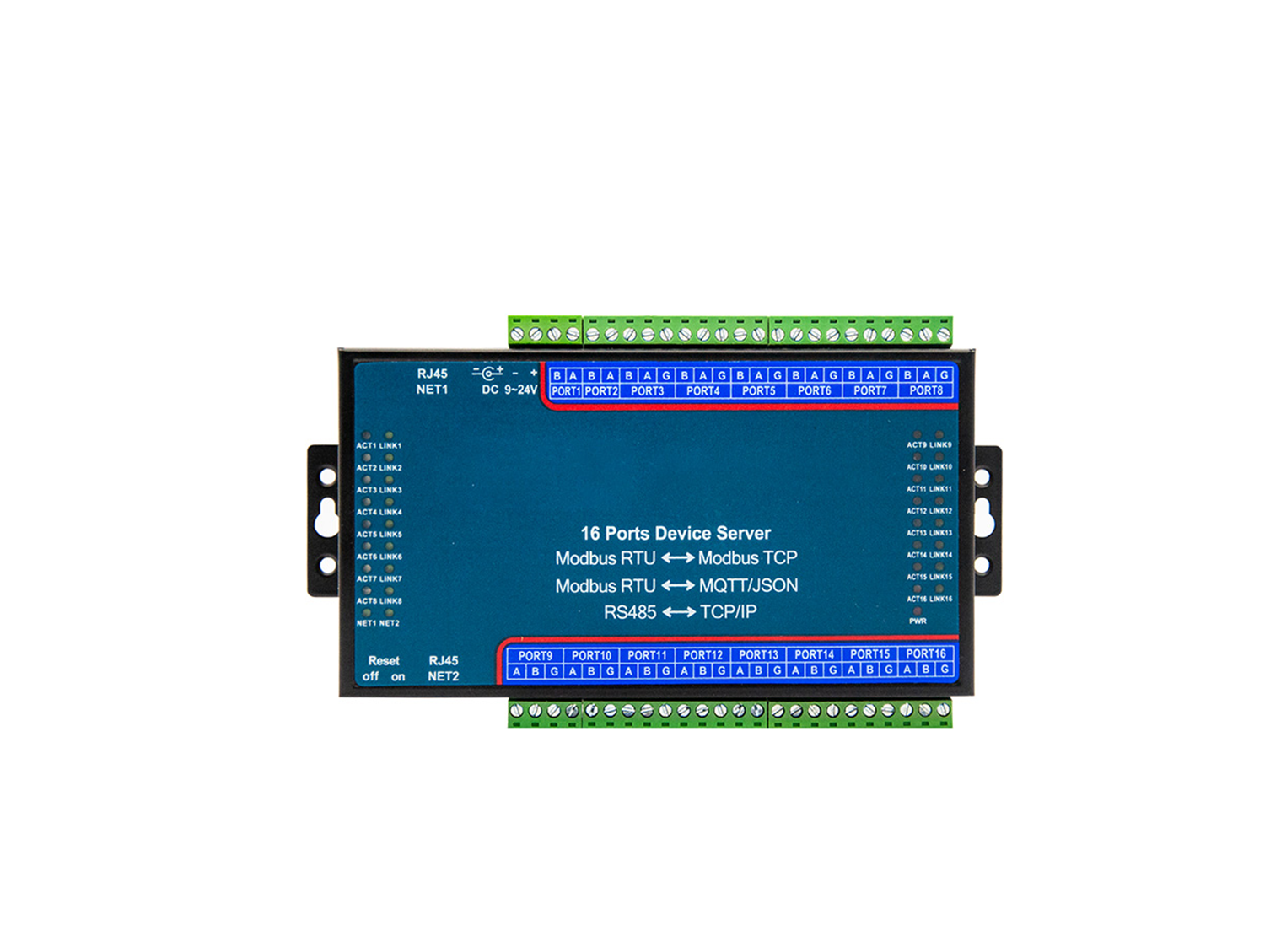
  • Through the use of cascading ports, the system can be expanded to support 8, 12, or 16 serial ports, with a maximum capacity of up to 32 serial ports.
Features

Technical Features

  • All 4 serial ports support RS232, RS485, and RS422 standards.

  • The 4 serial ports can operate independently in full-duplex mode without mutual interference, and each can be configured with a different baud rate.

  • Includes 2 network ports with built-in network switch functionality, allowing the device to also serve as a network switch.

  • Equipped with a comprehensive set of LED indicators; each serial port features dedicated indicators for TCP connection status and data activity.

Software Features

  • Supports TCP Server, TCP Client, UDP, and UDP Multicast modes. In TCP Server mode, it supports up to 10 simultaneous TCP connections.

  • Supports baud rates from 1200 to 460,800 bps; data bits from 5 to 9; parity options including None, Odd, Even, Mark, and Space; as well as CTS/RTS hardware flow control and XON/XOFF software flow control.

  • Supports sending the device's MAC address upon connection, facilitating cloud-based device management.

  • Provides a DLL-based software development kit (SDK) for PC-side device discovery and configuration.

  • Supports dynamic IP assignment via DHCP and domain name resolution via DNS.

  • Supports remote device discovery and parameter configuration via the cloud.

  • Supports remote monitoring of TCP connection status via software; the virtual serial port includes a data monitoring feature.

  • Supports Modbus gateway functionality, including conversion between Modbus RTU and Modbus TCP.

  • Supports multi-host access: in a request-response (query-response) communication model, it allows multiple computers to access the same serial device simultaneously via the network interface.


Specifications
ItemSpecification
OutlineInterfaceRS232: DB9; RS485:Terminal   block; RS422; Terminal block
Power   Supply5.5mm,   inner positive outer negative, standard power jack; 
Case   materialMetal
Dimensions   L × W × H92x197x25mm
Communication   InterfaceEthernet10M/100M,   2kV surge protection
Serial   Port4 ×   RS232/422/485, RXD, TXD, GND, CTS, RTS, DTR, DCR
Serial Port ParametersBaud   Rate1200~460800 bps
ParityNone, Odd     parity, Even parity, Mark, Space
Data   Bits5~9   bits
Flow   ControlRTS/CTS,   DTR/DCR, None
SoftwareProtocolsETHERNET, IP,   TCP, UDP, HTTP, ARP, ICMP, DHCP, DNS, Modbus TCP
Configuration   MethodZLVirCOM tool,   Device management API library
Communication   ModeSocket,  virtual serial port, Device management API   library
Operating ModesTCP Server, TCP   Client (TCP Server can run simultaneously), UDP, UDP Multicast
Power RequirementsPower Supply9~24V DC, 
Power   consumption5W
Environmental RequirementsOperating   Temperature-40~85℃
Storage   Temperature-45~165℃
Humidity   Range5~95% RH     (Relative Humidity)


Application

Suitable for applications such as:

  • Power electronics, smart instrumentation, and energy consumption monitoring;

  • IoT gateways serving as a communication bridge between devices and the cloud;

  • Remote monitoring and program downloading for various automated PLCs;

  • Communication interfaces between various SCADA/HMI software and hardware devices;

  • Network connectivity for equipment in access control and security systems;

  • Data acquisition and network connectivity for medical equipment.